 |
| world traveler off on another adventure |
"What do you hope to get out of this?"
Well, that’s a sure fire way to set oneself
up for disappointment. As a retreat leader, I used to ask that question to help
determine which kids were really ready for the retreat experience. Nine times
out of ten, the ones who said they were looking forward to “the crying part” or
were expecting a profound spriritual experience were the ones who left slightly
to strongly disappointed at the end. I remember one such student angrily
berating me and the entire retreat staff at the end because she didn’t think
she or her classmates cried enough or that the experience went deep enough. The
ones who answered by saying they honestly didn’t know what to expect were the
ones who were most likely to have a genuinely moving experience. The same goes
for pretty much every adventure we go into. When we enter with specific
expectations rather than general hopes, we are setting ourselves up to be let
down, putting unrealistic responsibilities on all the people we interact with –
whether or not they are aware of them, and lessening our chances of having
unforeseeable but incredible experiences.
This was a hard concept to explain to the
high schoolers and is a hard concept to explain to my daughters now. The
challenge is anticipating enough to be prepared, but then letting go and just
participating in the world as it comes. We have to find a balance between
planning and just going with the flow.
When my older daughter and I went to
Ukraine, learning this lesson was a huge part of the adventure. Before leaving,
we talked about having an adventure spirit. I explained that we couldn’t
control everything that happened on our trip, so we shouldn’t go with specific
expectations. We looked through a guide book and talked about things we had
done on previous trips to get general ideas about the kinds of things that
might happen. We picked a couple goals – improve our Ukrainian language skills,
see some historical locations, relax – and packed to be prepared for anything.
We made an adventure journal and set off.
 |
| unplanned, totally blissful hammock adventure in the Carpathian Mountains |
Each day, we would remind each other to
find the adventure in the day. When weird, unpredicted things happened to us,
we would say, “well, this is an adventure!” Each evening, as we were winding
down and getting ready to sleep, we would talk about, “what was your favorite
adventure today?” Adventure became our key word and a great way to turn
discomfort into smiles. It wasn’t always easy. Some days the adventures were
seriously uncomfortable, irritating, and sometimes even a bit scary. We got
through it all, though, and came away with some amazing memories.
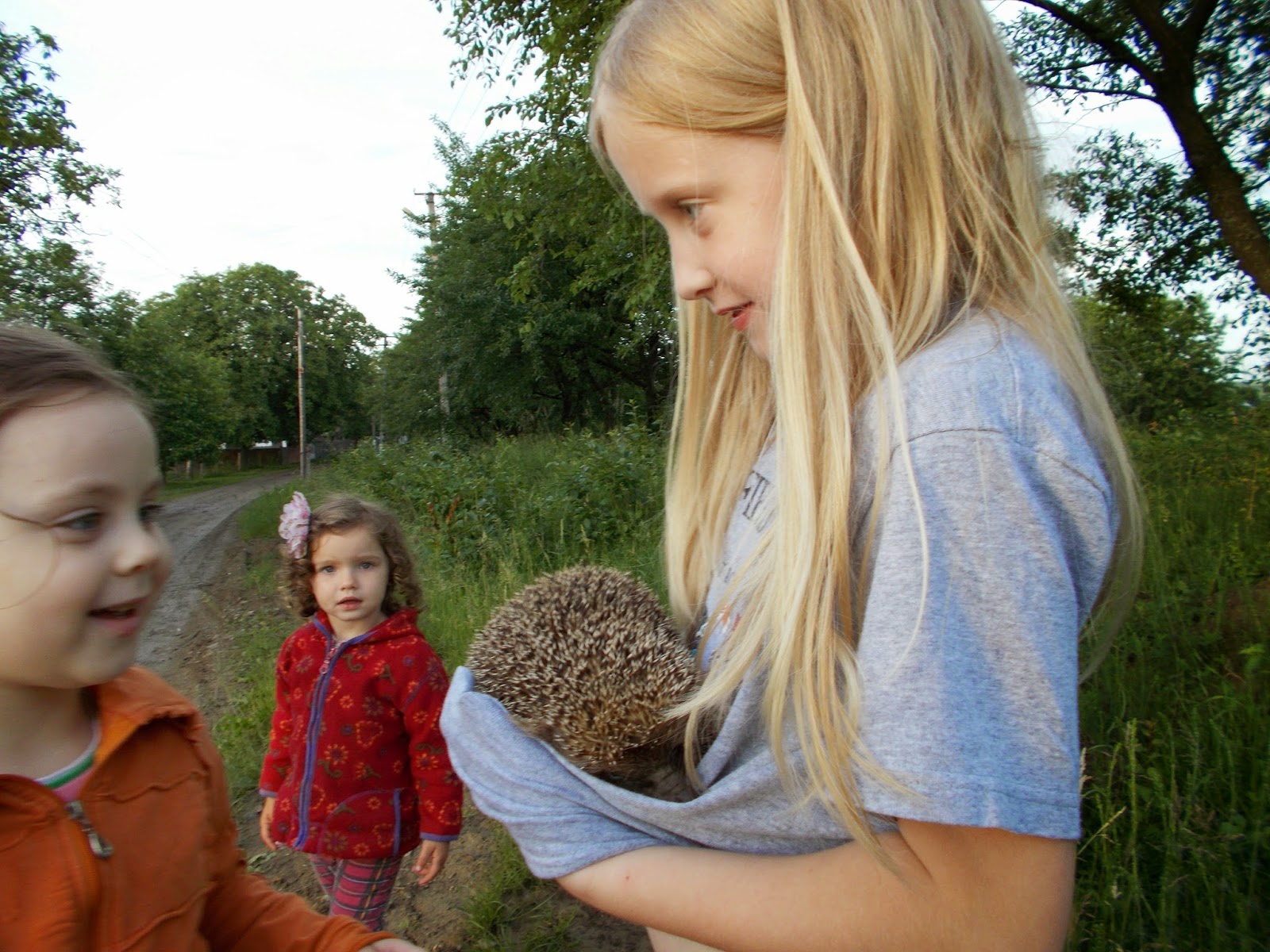 |
| real wild hedgehogs discovered while cherry picking |
Reminding ourselves to participate instead
of anticipate helped us to focus on the incredible things that were happening
around us – tiny frogs covering sidewalks, mud wraps, hedgehogs, cherry picking
on the border with Romania – instead of focusing on the things that we couldn’t
control such as how other people behaved, the weather, the food options, etc.
Here are some key things to try to do to
find that balance between reckless flying by the seat of one’s pants and being
overly expectant.
- Think in broad terms while
packing if you are having an adventure far from home. Are you packing that
dress for any special occasion or are you anticipating finding a great disco
and dancing with a tall handsome stranger with dreamy blue eyes and a melt your
knees accent (that did happen to me and is why I now have two children)? Are
you daydreaming about really detailed adventures you’d like to have, repeating
those details in your mind, or are you daydreaming about multiple, varied
what-ifs? This is where my older daughter really struggles. She likes to put together the most intricately detailed plans for what will happen even down to what other
people will say, what shoes she’ll be wearing, what the weather will be like,
etc. In other words, impossible plans.
- Read guide books to get ideas, but not to make minute-by-minute
itineraries. No matter where you are going, weather, traffic, and unforeseeable
events can spoil the best made plans. When we are traveling, we put together
target lists or lists of things we think would be fun to check out or try. When
we get where we are going, though, we don’t see that list as must do’s. We
remain open to finding a different experience. Our list is sort of a jumping
off point or back up to finding something better once we get places. My husband
loves chatting with new people, so he usually makes a new friend and then finds
out from them if our target list is good or if we’d be missing cooler things.
The chat is usually the most memorable adventure of the trip although there is
no way we could plan on finding friendly people everywhere we go.
 |
The kittens she found at every place we visited were
the highlights of the trip for her,
something not included in any guide book. |
- When you talk about hopes and goals, leave room for interpretation.
Hope is a vital part of being a happy walrus. I need hope. My girls need hope.
Goals are important, too. Goals are what drive us forward and ensure personal
progress. When we talk about hopes and goals, we try to keep them general. We
hope to make new friends, but don’t limit what kind of friends. We hope to
learn new things, but don’t limit where that knowledge will come from. We hope
to be nicer people, but don’t limit who we will be nice to or how the kindness
will manifest. For goals, we set a goal that relies primarily on our own
actions, e.g. grades, polishing hockey
or gymnastics skills, sending out a certain number of applications each month,
sewing a certain number of items for the shop. We then approach those goals
knowing that we may need to change strategies, find help down the road, or take
longer than we initially thought.
- Practice finding adventures every day. Even when we aren’t on
vacation, we try to have adventure days. Sometimes the adventure is just going
to the playground and meeting someone new. The other day, we had an adventure
when our dishwasher broke and the maintenance guy came to fix it. He turned out
to be a very friendly, super interesting new friend. By trying to find the
adventure in every day, we get in the habit of thinking “this day holds
something really cool” and letting it happen rather than trying to force it. As
my girls get older and the more we practice thinking in terms of appreciating
the adventures that happen, it gets easier for them to stop whining about what
they want to happen and genuinely appreciate what is happening.
This is all a work in progress, but I am
hoping that by learning how to find adventures my daughters will be able to go
through life creating memories, collecting cool stories, and avoiding the
frustration that comes with expecting specific experiences, feelings, or
actions from others, and that is a good, general hope.
 |
| my husband's great-aunt and a true expert of joy finding and adventure leading |


